Memories anchor people

As the world accelerates and machines advance, people return to what anchors them: their memories. Speed can often create isolation, making time-travel feel even more desirable and audio makes that happen. Revisiting past moments helps understand growth, acknowledge change, and appreciate the present. This piece explores this concept through using Google AI/ML integrations and visual-based generative code.

GitHub had already shipped a blunt fix for AI-driven PR noise: a cap on how many open pull requests a non-collaborator could have, plus a manual way for maintainers to search for and exempt specific users. It worked, where maintainers put in one name at a time. Yet, feedback kept pointing that: the judging if a user is trustworthy based on write access was the wrong signal.


That distinction broke immediately at scale. For example, Rust has contributors who aren't org members but have 10 to 30 legit PRs open at once. They are long-time-trusted contributors. However, the cap couldn't tell them apart from a first-time account flooding the repo with AI-generated noise. Charlie Marsh at OpenAI and Ivorforce at Godot said versions of the same thing on the public issue. Four maintainers, four major projects, and the same objection- independently.


We set out to design a rule builder maintainers could configure once, correctly, with the logic available exactly when they needed it, and validate it with real maintainers before it shipped. My job was the fix: let maintainers define trust themselves, instead of GitHub defining it for them with a single access flag. I owned usability testing on PlaybookUX, AI prototyping with Copilot, and green lights on the engineering and accessibility after.

Inspired by neural networks

It is fascinating how memory evolves as we do, as it reorganizes itself as we learn, travel, and grow. Inspired by neuroplasticity, a neural network adjusts its predictions with every input, just as memories shift with every new moment. In addition to audio-reactive nature of the experience, these visuals respond the same way.

The power of audio to control

What people enjoyed from earlier explorations was the chance to control an intangible environment and the thrill to have a say in the unknown. It makes it wondrous and addicting paired with audio. The power of music is beyond comprehension, it transports and reach corners of the brain no one can. The audio-reactive nature required the balance of the same control.

From a NYC $15 Visit to Michigan

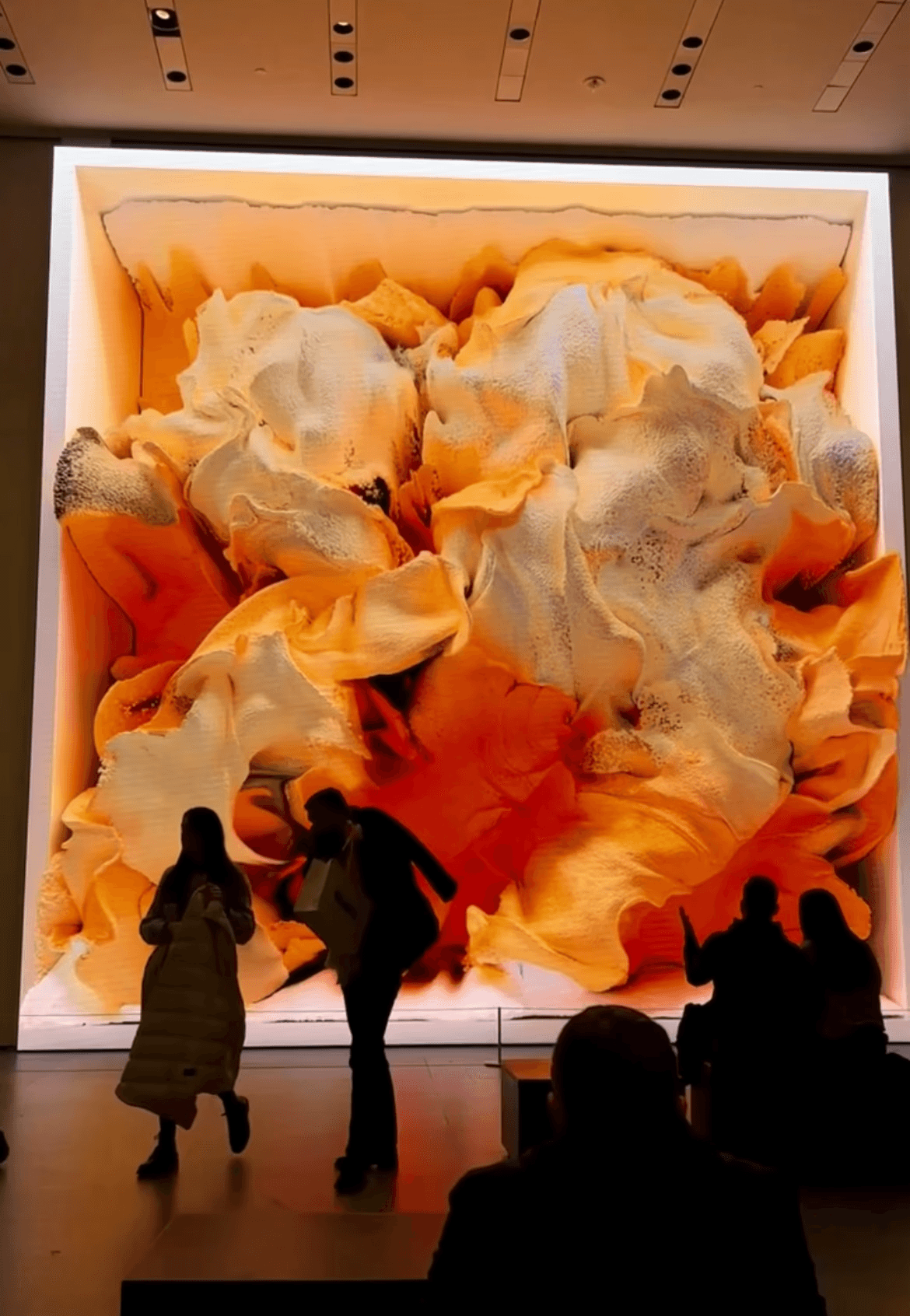
A couple of years ago, I visited MoMA in New York City, where Refik Anadol’s first generative artwork was on display. On a bench in front of me, a couple sat watching the piece loop for an hour. This was an evolved rendition of 'interaction'. I'd been searching for the sweet spot between art, technology, and people and that moment was my origin story.

An year later, I had my full circle moment when I met Refik Anadol in Michigan. I was introduced to TouchDesigner (design software) and ever since I have been exploring static information into dynamic moments.